A Midsummer Trip to the Tropics

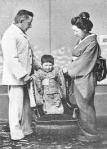
LafcadioHearnFamilyLafcadio Hearn is one of the more intriguing travel writers I’ve read. He ended up as a revered professor of literature in Japan. During the 1870s – 1880s, he roamed the U.S. and Caribbean for many years and worked as a journalist in New Orleans and Cincinnati. He was born Patrick Lafcadio Tessima Carlos Hearn on the Ionian Island known as Lefkas or Santa Maura, to a Greek mother and an Irish father, June 27, 1850. I was born 99 years later, to the day.

Hearn’s biography is too rich and convoluted to explore in a blog post. He experienced a varied, full life, including passages of intense poverty and hardship. His professional activities spanned literature, translation, journalism and teaching in several countries. Hearn ultimate settled in Japan, arriving in Yokohama in 1890. By 1896 he was a Japanese citizen with a Japanese wife and a post at Tokyo Imperial University teaching English literature. He died in Tokyo, September 26, 1904 at age 54 of heart failure and was buried in Zoshigaya Public Cemetery, Tokyo.

Sources:
Lafcadio Hearn. American Writings — Some Chinese Ghosts, Chita, Two Years in the French West Indies, Youma, Selected Journalism and Letters. New York: The Library of America, 2009. Illustrated.

Goodman, Henry (ed.) The Selected Writings of Lafcadio Hearn. Introduction by Malcolm Cowley. New York: Citadel Press. 1949.

******

Excerpt from: Two Years in the French West Indies. Lafcadio Hearn. Harper & Bros. Publishers, New York and London, 1923. Photos by Arthur W. Rushmore, Drawings by Marie Royle.

In Martinique….

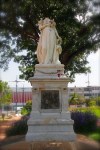
“Rebuilt in wood after the almost total destruction by an earthquake of its once picturesque streets of stone, Fort-de-France (formerly Fort-Royal) has little of outward interest by comparison with St. Pierre. It lies in a low, moist plain, and has few remarkable buildings: you can walk all over the little town in about half an hour. But the Savane, — the great green public square, with its tamarinds and sabliers, — would be worth the visit alone, even were it not made romantic by the marble memory of Josephine.

I went to look at the white dream of her there, a creation of master-sculptors … It seemed to me absolutely lovely. Sea winds have bitten it; tropical rains have streaked it: some microscopic growth has darkened the exquisite hollow of the throat. And yet such is the human charm of the figure that you almost fancy you are gazing at a living presence. … Perhaps the profile is less artistically real, — statuesque to the point of betraying the chisel; but when you look straight up into the sweet creole face, you can believe she lives: all the wonderful West Indian charm of the woman is there.

She is standing just in the center of the Savane, robed in the fashion of the First Empire, with gracious arms and shoulders bare: one hand leans upon a medallion bearing the eagle profile of Napoleon. … Seven tall palms stand in a circle around her, lifting their comely heads into the blue glory of the tropic day. Within their enchanted circle you feel that you tread holy ground, — the sacred soil of artist and poet; — here the recollections of memoir-writers vanish away; the gossip of history is hushed for you; you no longer care to know how rumor has it that she spoke or smiled or wept: only the bewitchment of her lives under the thin, soft, swaying shadows of those feminine palms. … Over violet space of summer sea, through the vast splendor of azure light, she is looking back to the place of her birth, back to beautiful drowsy Trois-Islets, — and always with the same half-dreaming, half-plaintive smile, — utterly touching.” (p. 58-590

The Trois-Islets, where Josephine was born, are across the bay from Fort-de-France, Martinique.

Headless Josephine statue Fort-de-France
The statue has been disfigured — beheaded — since Lafcadio Hearn’s admiring visit. Read about the cultural connotations in this University of Michigan report.

Posted in Culture, History, Hot Climates, Travel, Writing | Tagged , , , | 1 Comment

Sacred Sites

So you believe there are places that shelter spiritual energy.  Are these locations protected?


Executive Order concerning Sacred Sites, May 24 1996

Sacred Sites, Contested Rites/Rights, Journal of Material Culture, V.9: N. 3, 237-261 (2004)

Posted in Travel Knowledge | Tagged , , , , , , , , | Leave a comment

Breaking Into Travel Writing

The best tip I can give you is: learn to write short. Whether you plan to write for travel blogs, newspaper travel sections or glossy
print magazines with gorgeous photos, editors prize travel writers who turn in tightly written copy. No matter how well you think you write, you will sell more work if you write short, especially in the travel market.

Why bother, you might be wondering? Blog postings can be 10,000 words long. There’s no limit. Who’s reading 10,000 word travel screeds these days? Nobody I know. Places to go; events to organize. Democracy to promote on Twitter.

Well, one way freelance travel writers break into the $1-a-word glossy travel and shelter magazine market is through the front-of-the-book sections. In
those sections– which are made up of a variety of short clever items, photos, product reviews, etc. — a “story” is really a fast-paced blurb or a mini-interview, but the writer gets a tag or by-line and usually, a significant check for little effort.

Magazine editors try out freelancers on these midget league pieces because they’ll lose small if the writer tanks the assignment. Worst case scenario, the editor can produce it  herself. Best case scenario for a freelancer is the editor likes how you handle the short item and listens to your ideas for a full-length story. Next assignment: a longer piece, maybe with travel expenses. Be aware that many of those little items are written by the magazine’s staff. For insight on whether the items are freelance written, compare tag lines with the names on the masthead.

Those little items can be lucrative. Once you internalize the  structure of a 250 to 500 word piece, you can knock them off quickly at proportionately better pay than a longer researched story. Pitch the idea as you would any other, after finding out which editor assigns for the “front of the book” department. If you’re good, editors will be calling and asking if you could dash off 600 words on a trend-setting destination that happens to be in your city, by Tuesday.

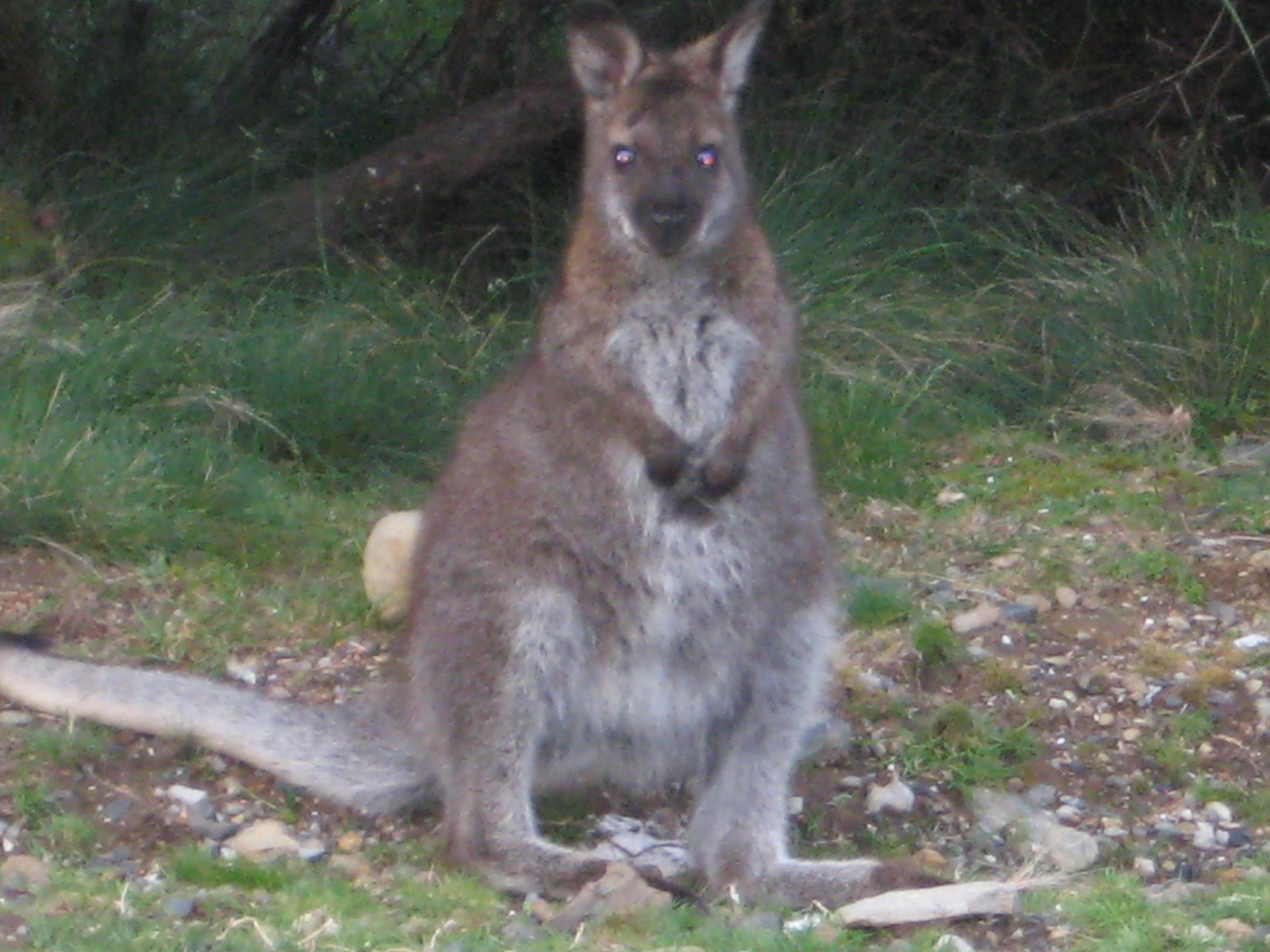
Curious wallaby.


You’ll also sell to newspaper travel editors if you write tightly. Travel sections are pinched for space. Long rambling tours of Argentina or Uzbekistan rarely appear in Sunday Travel sections anymore. You will see three to five short (700 to 1,000 word) pieces on specific topics. New Restaurants in San Antonio; Shopping in Shanghai; Medical Tourism in Mexico; Taking the Kids River Rafting in New Hampshire. Sure, there will always be a North American market for destination stories about New England, Florida, LA, Hawaii, the Caribbean, but being able to follow travel trends and hook your story idea to lifestyle changes is an important marketing skill.

I can almost hear you wailing, “…900 words! Travel writing needs space for that scenery, the people, the food, the colorful markets…” You’re thinking about destination articles that appear in Islands or the Smithsonian Magazine. If you can line up that kind of work, terrific, but most of us write for bread and butter markets that need short, tightly written travel stories. Generally, novice travel writers start with newspapers and move up to writing for regional magazines and ultimately, for the big dollar glossies.

Here’s what else not to do: travel articles that start with the trip to the airport are almost always rejected. Another fault in travel narratives is describing every meal, cab ride or museum. Travel writing isn’t just about buildings and landscapes, it’s about people and places. Hone in on what readers can imitate in what you did. 

Target your story to the right publication or circulation market. Study where various demographic groups go for their recreation– beyond the obvious. Editors know that Santa Fe is hip, that spa and spiritual retreat vacations have replaced baking on a beach, that soft adventure and nature tours have replaced racing through six European capitals — you need to construct a story idea and a focus that rocks a travel editor back on his heels and appeals to  the publication’s readership.

For newspaper travel editors, the preferred method is to send the complete story, 800 to 1,000 words including a short sidebar, and photos. Newspaper travel editors are more interested in your story idea and fast paced writing style than where you’ve been published before. A useful sidebar can sell your story: where to stay, eat, a range of hotels at different price points. 

Travel stories with a service focus are hot right now. Easy to research because you use quotes from experts to “tell” the story. Examples might be: taking along a pet, inter-generation travel, active/sports weekend getaways, leaning a language during vacation. Service articles about consolidator airfares or
internet ticketing are usually written by staff, because the lead time for a freelance writer to do the piece would render stale information.

Photos can sell your article. Send snapshots, slides, transparencies, black and white or color, but select images that have strong contrast and distinct close-up subjects — no sunsets, fuzzy beachscapes or minuscule shepherds with flocks of goats on faraway hillsides.

Think regional. Your expertise about a region or city is an  asset. Offer stories about your hometown to papers and regional magazines that view your home ground as an attractive destination. Editors will be interested in your local expertise, so mention that in your cover letter (with completed manuscript to newspapers) or query letter (to magazines). Don’t pitch the obvious, give them an insider’s perspective.

Aim for realistic markets to start. Sorry, but you’re probably not going to start your freelance travel writing career in Travel & Leisure magazine. Find your level and work your way beyond it, using those newspaper travel clips to convince editors at magazines that you can handle assignments on contract. If you enjoy wasting time and stamps, go ahead, send your work to the New Yorker or Atlantic Monthly. 

In the long run, you’ll earn a steadier part-time income and  advance your career faster if you focus on regional, trade and special interest magazines. Find those magazines on newsstands, on the internet, on an upscale friend’s coffee table. Almost all special interest magazines are hungry for stories with a travel focus that addresses the magazine’s stated purpose, e.g. antiques, chocolate, glass collecting, railroading, whatever. I’ve even seen a travel article in the Masonry Institute Magazine — a tour of the great monuments of the world made of brick. 

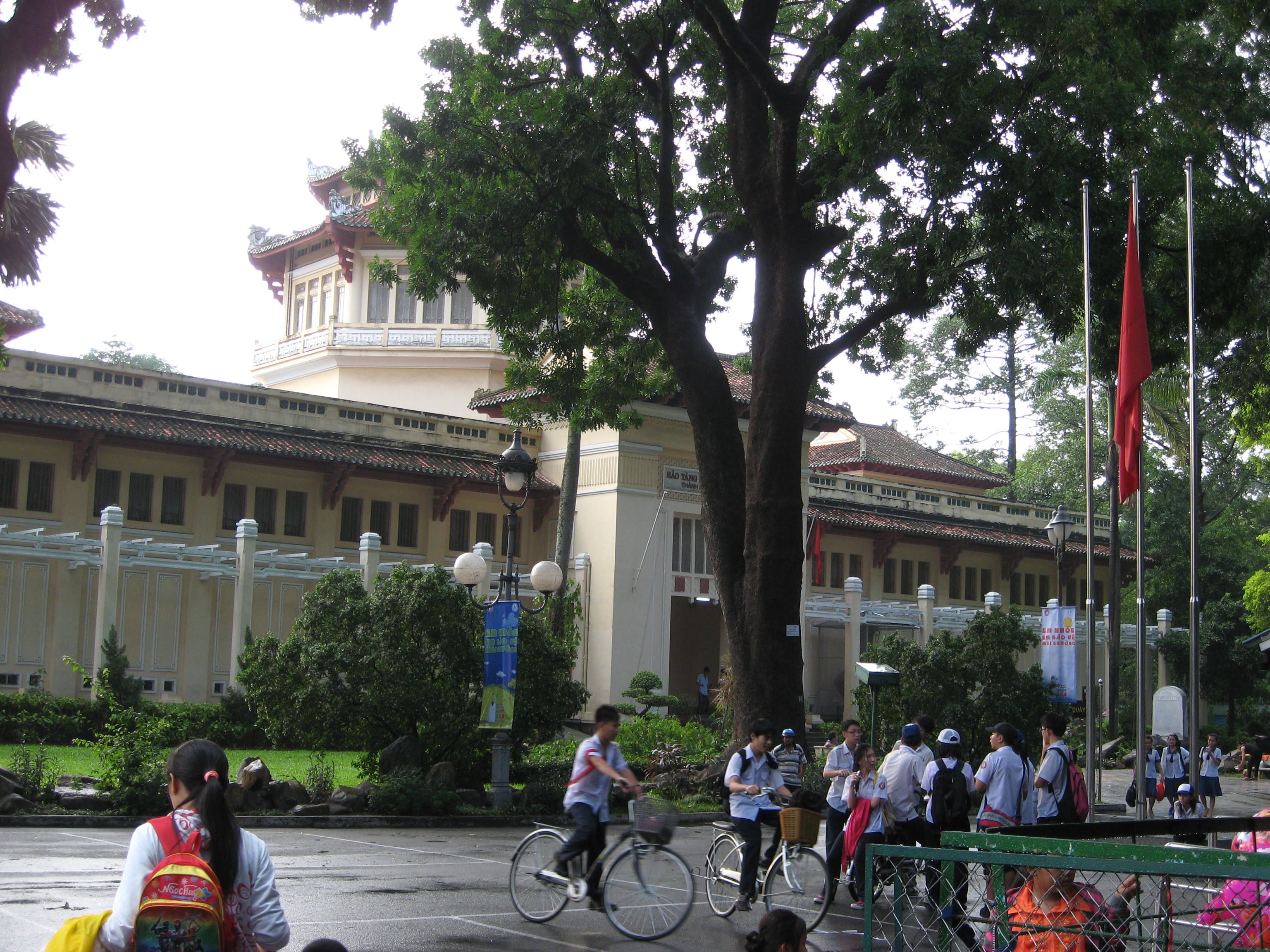
Ho Chi Minh City.


Regional magazines are another break-in travel market. Many states, cities, recreational regions put out magazines aimed to attract tourists or promote local business. Sometimes the state economic and development commission has a hand in producing those magazines. Local writers have an edge. Remember that regional travel magazines come and go rapidly. Evaluate the magazine’s finances carefully before sending a query or working on a story. 

How do you break in? Send a smart query about a place within the scope of the magazine’s stated objective, then follow up with a phone call and have three other ideas you can discuss casually. Show how you know the region. 

Scale back your expectations. The travel writing genre has particular stylistic demands and you probably aren’t going to hit the pages of the Los Angeles Times or New York Times first shot. Pick medium sized publications that use freelance material. Seek out the smaller suburban magazines distributed to upmarket zipcodes near urban markets. For example, in the Washington, DC area, there are publications driven by certain types of advertising that are distributed in the fancy suburban neighborhoods. They need articles to support the advertising.

Sometimes you can break in to a difficult market by having a story in the bottom drawer of your desk, my grandmother the newspaper editor used to say. And it’s true except the ‘bottom drawer’ is a thumb drive or a forgotten desktop folder. A news event can make your unsold travel story suddenly timely. Travel editors at large papers sometimes are confronted with a hole – a planned story that didn’t work out or a story pre-empted by other news events — if they have your story, and it fits (i.e. short enough), you could get a break.

And now, I better quit, because I’m over my assigned word length!

Copyright © 2000 L. Peat O’Neil, all rights reserved.

L. Peat O’Neil is the author of “Travel Writing: See the World, Sell the Story and Travel Writing: A Guide to Research, Writing and Selling.”
O’Neil blogs at http://peatoneil.com and http://peatwalk.blogspot.com

This article originally appeared in Writing for DOLLARS!, April, 2000. Reprinted with permission.

Posted in Freelance Writing, Publications, Writing | Tagged , , | 4 Comments

Travel Writing: See the World-Sell the Story by L Peat O’Neil

Appendix 1 Along the Pyrenees Trail @ L Peat O’Neil

Appendix_2 World’s Shortest Scheduled Airflight @ Peter Mikelbank

For those who are reading my book Travel Writing: See the World, Sell the Story, 2nd edition, published by Writer’s Digest Books in 2006, these are the two travel articles mentioned as the appendices.  Buy the book here .

Pyrenees Pilgrimage, A Solo Walk Across France, published in 2010,  is available through Amazon in Kindle or print on demand editions.

Posted in AdventureTravelWriter.com, Books, Freelance Writing, Publications, Travel, Writing | Tagged | Leave a comment

Residencies for Nature and Outdoors Writers

Spring Creek – University of Oregon – writer in residence program

Mesa Refuge, Point Reyes Station, California – writer’s residency

Taos Summer Writer’s Conference – fiction and non-fiction writing conference

Voices of the Wilderness  – artist’s residency

Island Institute, Sitka, Alaska – resident fellowships

Sitka Center – residency programs for artists, writers, natural science scholars, musicians

National Park Service Residency Programs on Cape Cod – for artists and writers

Posted in Travel Knowledge | Tagged , , , , , , , , , , , , , , , | Leave a comment

Ethics of Travel.

A Code of Ethics for Travelers

………………from the North American Coordinating Center for Responsible Tourism

Travel in spirit of humility – desire to learn. Be aware.

Listen and observe.

Different time concepts and tought patterns.

Instead of the beach, discover another way of life.

Local customs.

Cultivate habit of asking questions instead of knowing it all.

You’re only one of many visitors so don’t expect privileges.

Volunteer your help, if appropriate and you won’t be a burden on the community.

If you are trying to replicate life at home, why travel?

When you shop from producers and artisans, remember the work that goes into handmade items.

Don’t make promises you can’t keep (such as e-mailing, sending packages, returning, etc)

Spend time reflecting on the experience.

Posted in Budget Travel, Culture, Education, Geography, Philosophy, Travel | Tagged , , , | Leave a comment

Building a Travel Story Idea

TW 2nd edBuilding A Story Idea Portfolio

Cultivating story ideas isn’t a mystery. The Writing Process starts with curiosity. What are you interested in? What stimulates your curiosity and drives you to explore a certain place or subject? The process runs like this: travel and explore, gather information, organize activities and notes, focus on a key aspect of place and people, select sense details, characters and anecdotes, write draft and revise for information flow.

Thinking process: Start the idea honing process by engaging with these questions: Why am I interested in writing on this topic? What focus will I develop? What audience is interested in this topic? Why would an audience care? Why am I the person to write this article? Who are the main characters in this place? What is it about this idea that generates passion for the writer and reader? What’s the point of my on-site research and what else needs to be experienced or investigated on this topic to accomplish my goals.

Action Item: Build your portfolio of story ideas – locations, topics, culture, history, environment, landscape, geography, people or personal ideas to write about. Start an online folder for online news articles or topics that intrigue you.

Posted in AdventureTravelWriter.com, Education, Freelance Writing, Student Projects, Writing | Tagged , | Leave a comment

Contests for Travel Writers I

Posted in Freelance Writing, Publications, Writing | Tagged , | Leave a comment

Colin Thubron Discusses ”In Siberia”

Colin Thubron, the prize winning  (PEN Silver Pen Award, Thomas Cook Travel Award, Hawthornden Prize) author of many travel books, reads from In Siberia to an assembly of spellbound professors and literature students who are gathered at a conference on travel writing at the University of Pennsylvania.

“We waded down its passageways as down a sewer,” Thubron reads.  “I lost count of the iron doors awash with stench, the grilles giving on to blackness.  Each dungeon was still fixed with twin wooden platforms bound in iron, and might have held forty prisoners. There were twenty such chambers in the basement alone.  Their walls were sheathed in ice.  Prisoners here, said Fedor (Thubron’s guide who knew a prisoner there), used to press the bodies of the dead against the walls to insulate themselves from the cold.” p. 273

Individuals in the audience tighten their flanks, others draw in breath, there’s a nervous cough.  We’re listening to Thubron describe his wintertime visit to desolate and decaying Stalin-era forced labor camps near Magadan in far eastern Siberia.  It is difficult to remember that Thubron wasn’t a prisoner in the transit camp, so bleak and painful is the word painting he recounts.

You need an atlas at hand to properly understand this book. Siberia occupies an enormous landmass–the 50 states would easily fit inside with millions of square miles to spare.  With  three of the world’s long rivers, and Lake Baikal, the world’s deepest lake, gold, uranium, timber and permafrost, the mix of geography and geology as forecasters of destiny permeates the narrative.  This spiritual barrenland called Siberia has been the proving ground for explorers in search of fame, the vast closet where the outcasts were swept.  The endless stretches defeated the dreamers and the exiles alike.  All except those who survived.

Thubron sketches the missionaries and explorers who came before him, the refugees and exiles cast out from the west by rulers from Peter the Great to Kruschev, and probably other Soviet and post-USSR rulers since. They swept the opposition and the detritus of their society off the map beyond the Urals. In the imagination of working stiffs back in Moscow, far eastern Russia holds the same mystique as the American west did 200 years ago or the Yukon and parts of Alaska still hold.  To Siberia went the crooks, the dissemblers, the weirdoes, the inconvenient, the too-smart, the too-dumb.

A magnet for melancholy characters, Thubron talks to the drunks and the disillusioned, doctors without hospitals, priests without parishioners, but his humility and honesty show up in the details.  

Thubron’s great gift to readers lies in the focused details, the dirty fingernails, tangled beards, and the back slapping, vodka swilling Mafioso. You live in the movie while reading this book. Entertaining stuff for the curious Russophile who may never get to these outposts.

The meaning of siber is “pure” in Mongol and siber means “sleeping land” in Tartar. Thubron traveled during a confluence of seasons,  moving across Siberia by train, truck, boat and plane, put on fast forward by nature’s cycles.  “For two more days and nights we sailed downriver, while around us the deciduous green turned to bronze, and the birch trees massed along the shores were blacked by pines, and the crimson flares of aspen flickered out.  The seasons were speeding up.  Within four days we traversed autumn, until the leaves were falling, and a coniferous deadness began to spread.” p. 121. Ultimately the immensity of nature overwhelms human scale and capacity. Only by communal effort can villages prosper in the harsh wilderness.


Travel writer, fiction stylist, Colin Thubron executes a distinctive sense of place in his narratives.  For example, in his quasi science-fiction, A Cruel Madness: “the older inmates still call the central block ‘the mad house,’ and sometimes, when the mist pours off the Black Mountains, you might think the whole institution a Gothic fantasy.” And in Turning Back the Sun: “You can never go back.  Deep ranges of mountain isolate the town from the sea, and lift across half the skyline.” His ability to convey a sense of people and culture within geography –whether he’s writing history, fiction or his own experience —  renders a deeper topography.


In Siberia is seen through the eyes of a  hardy traveler willing to go hard seat, hitch hike and live in his clothes.   Thubron hints at his underlying unease at these great distances and the legacy of suspicion from Soviet rule.  In his other book about Russia —  Where Nights are Longest, an account of a 10,000 mile drive through western Russia published in 1983, he watched his back, sometimes afraid for his safety and concerned about reprisals to his hosts.  During his mid 1990’s Siberian trip, inertia has replaced bureaucratic zeal; his papers are rarely checked, he moves freely.  The constraints are the original shackles of Siberia – distance, isolation and the elements.   

There are travel writers aplenty in the marketplace today. A swathe of them are gathered at this conference to parse intention and impact of several centuries worth of travel narratives.  Some of them have written up their own travels.  Some publish scholarly accounts gleaned from the journals of long forgotten perigrinators. Most are English professors  who use the travel format to coax young writers to improve their writing — travel writing has  found legitimacy with academia at last in English Composition 101. The difference that separates Thubron from other practitioners in the genre, is that he digs deeper. When he arrives in a new place, he seeks clues that create a narrative about the place and its people.

 “I was looking for signposts, I knew.  I couldn’t imagine a Russia without destiny.  So I was hunting for symptoms of a new faith or identity, but hunting impatiently, as people do on first arriving somewhere, hoping for talismans, for simple meanings.  ”p. 6

As he moves across the continent, he dogs after scraps of information that stop at the edge a town or a bleak cement building. Yet he finds a self-anointed shaman and an archeologist who believes he’s found evidence of the earliest human settlement. Introductions bring him to an apparatchik who believes in the government still, a museum curator willing to whisper what the real story is. He listens solemnly to  disillusioned scientists set up by Soviet government to research laughably impossible projects—magnetic power zones, physic rays, aspects of the soul that no research might quantify.


You can’t be a writer with the Thubron’s treadwear  without a refined sense of self awareness.  He knows the little boy within him is excited by a river trip to the Arctic Circle and telling this, allows himself to be vulnerable to the world-weary scorn of his readers, who may think themselves more daring adventurers. He pokes fun at himself and wins our trust. I liked Thubron’s humility in the face of workers rising early in the morning to do jobs of enormous difficulty that might not even pay. 

To his credit, Thubron listens to the Siberians, the crude and the complaining, the sensible and the fraught.  He quests after the unfathomable and mystical, an aspect no itinerant can really grasp, and usually comes up with a semblance of personal mysticism overlaid on experience.

He has a habit of focusing on the slightly insane, the obsessed, the madly optimistic.  Perhaps this is characteristic of residents of Siberia, as I discovered myself during a month in the Russian Far East, in 1993.  Siberia, like the American West, became the zone for cast-offs, criminals, trouble makers, dissidents, proto-revolutionaries.  Siberia is a cleansing ground, a wetland to purge those perceived a problem by whomever was in charge.   p. 114. Along the way we met a practicing Tuvan shaman near Lake Baikal who needs Walrus tusk, we visit the tender of the last chapel of the Old Believers, a mad scientist who believes Russian cosmic thinking can save the world from soul destroying materialism.

Focusing on a pivotal local figure in each town he visits, Thubron gives us dialogue with real people, sometimes the characters are achingly optimistic, sometimes, as we might expect, they are  beaten. The tone is set early on, when Thubron tips the bottle with a hobo drunk living in a field near Katarinaberg where Czar Nicolas II and his family were murdered.  He examines the decay and detritus of a society moved on like debris after a flood, stuck or clinging to their ideological branches.

In a way Thubron is  travel writer as knowing spy. Blending in because he speaks Russian and his features suggest Estonia or  the Sami of the far Arctic,  yet standing out because he isn’t really from there, Thubron nods and agrees with locals as they tell their tales, while thinking his private thoughts.

Later, during other conference break-out sessions, I sought Thubron and tried to pin him down on truth in travel writing, an issue that buzzed during between-session parlays. The previous evening, another writer had read from his book,  a narrative larded with obviously imagined and embellished events, which he claimed was non-fiction travel writing.   One of the conferees had pointed out that all writing is invented, whether it is called fiction or non-fiction. Others complained  that the  author from  the make-it-up style of travel writing insulted the audience.

“We expect truth within the form.  I take exception when the reader expects truth and the writer purposefully distorts  the event,” he said. “A postscript or an editor’s forward alerts readers that the writer is playing with images, but to present all as truth when whole sections are invented, that’s wrong.”

“The caveat, of course, is that nothing written is truth,” said Thubron, joining his hands around a thick white mug at a table in the hotel’s dimly lit coffee shop. “Writers forget, they exclude information all the time, creating a parallel text to what actually happened.  When you work from notes, it’s the author’s choice.  No travel book is entirely truth in that sense.  But, when reality is so extraordinary, why invent?”

I asked the obvious: How would a reader know when a writer invents material.

Thubron answered:  “If a reader  knows the culture, when a writer invents, the scenes ring false.”

For me, that was the crux of Thubron’s In Siberia.

Anyone who has been there– and I have, to a few of the places he visited and others, equally remote, that he didn’t – knows in a heartbeat that these odd and wildly generous characters that Thubron meets wherever he goes are typical of the Russian hinterland. He didn’t have to look too deeply to find pathos.  Travel in Siberia is always consternating, so the encounters with the colorful locals replace the tedium and the setbacks.  That’s exactly the way In Siberia reads.

But I wondered about the dull people Thubron must have met in Siberia.

He writes of a broken infrastructure, people with suspicion for outsiders and neighbors alike.

Using a technique that could trip a clumsy writer, Thubron alternates passages in the past tense for bits of arcane history and urgent present tense description of  his own adventures.  He artfully weaves anecdotes that demonstrate ‘what if’ scenarios — a Spanish commandant’s daughter in  1803 San Francisco who pined in a convent she founded, to live veiled in the memory a noble Russian adventurer who died before he could return to California, a land that could have become Russian if  history played out differently. p. 111.  What if Lenin was never exiled?

The surrealism that characterizes Siberia  edges onto nearly every page. Mystified by the people’s  quest for religion, he walks with “the KGB major turned Baptist pastor, to a chapel built with American dollars in Communism’s City of the Dawn.” p. 239. Shaking his head in disbelief, he tells the conference audience,  “The gulags exist –the mines at Butugychag and the transit camps at Magadan are all still there.  But the people don’t have the aversion to the camps.  Disaster is perceived as normal in Russian history,” said Thubron.

“I really have to check facts out,” said Thubron. He worries that travel writers prolong myths and clichés. We talked about the issue of accepting hearsay when local knowledge may be the wrong information.  How writers have to check the facts in libraries. “People don’t mention what they don’t see.  They miss the things out there that might surprise them,” he said. “I may do too much analyzing. When I’m obsessed with a subject, I’m thinking how to get people to talk about it, how to describe the next landscape.”

Tourism has benefited Siberia, to a certain extent.  Korean and Japanese investment has improved some of the far eastern cities.  But environmental restrictions may be overlooked when rivers are leased for fishing tour operators and rapacious timber harvesting continues.   

Thubron said he worries he might miss something.  “You’re nagged that you’re an outsider looking in.  For example, I spoke with Muslim students in Bukhara–they’re the heart of young Islam of the future.

I considered them true insiders, but they told me they felt like outsiders with little communication. They felt shunned by the secular city.”  

The book ends in Magadan with the scary shuffle through ruined transit camps and caved in gold mines.  “ In Siberia we’re all outsiders,” said Thubron, “immigrants to the landscape. The world is made up of hundreds of millions of exceptions.”

In Siberia

by Colin Thubron

Harper Collins, January, 2000

ISBN: 0-06-019543-6

$26.00, 288 pages, Index

——

Interview reported by L. Peat O’Neil who writes for the Washington Post and teaches travel writing at UCLA online. Books include:  See the World-Sell the Story (2005), and Pyrénées Pilgrimage (2010).
Posted in Books, Education, Geography, Travel, Writing | Tagged , , , , | Leave a comment

Cowboy Poets

Mythmakers of the west and cowboy poets still roll their own and tie a shake a mean lariat.
Join the Arizona Cowboy Poets Gathering in August, 2012.

Keep in mind the next cowboy poets festival in Arizona February 2013.

And what about those cowgirl poets? Don’t forget them!  Cowgirl poets wowed the crowd at the Alpine, Texas show reports the  live.work.dream blog.   Go get ’em Billy Jean.

Posted in Travel Knowledge | Tagged , , , , , , | Leave a comment