Motivation to Dream (and Act) as a Travel Writer

©L. Peat O'Neil 2012

©L. Peat O’Neil 2012

Personal desire is the best motivator for exploring and writing about a place.  After all, if you want to be there — if you’re truly interested and engaged — you’ve a better chance of communicating  your experiences.  Care about the places you choose to write about. Cultivate passion for the places and the people.  Learn and appreciate various cultures.

Travel Writing: See the World Sell the Story by L Peat O'Neil, Writer's Digest Books.

Travel Writing: See the World Sell the Story by L Peat O’Neil, Writer’s Digest Books.

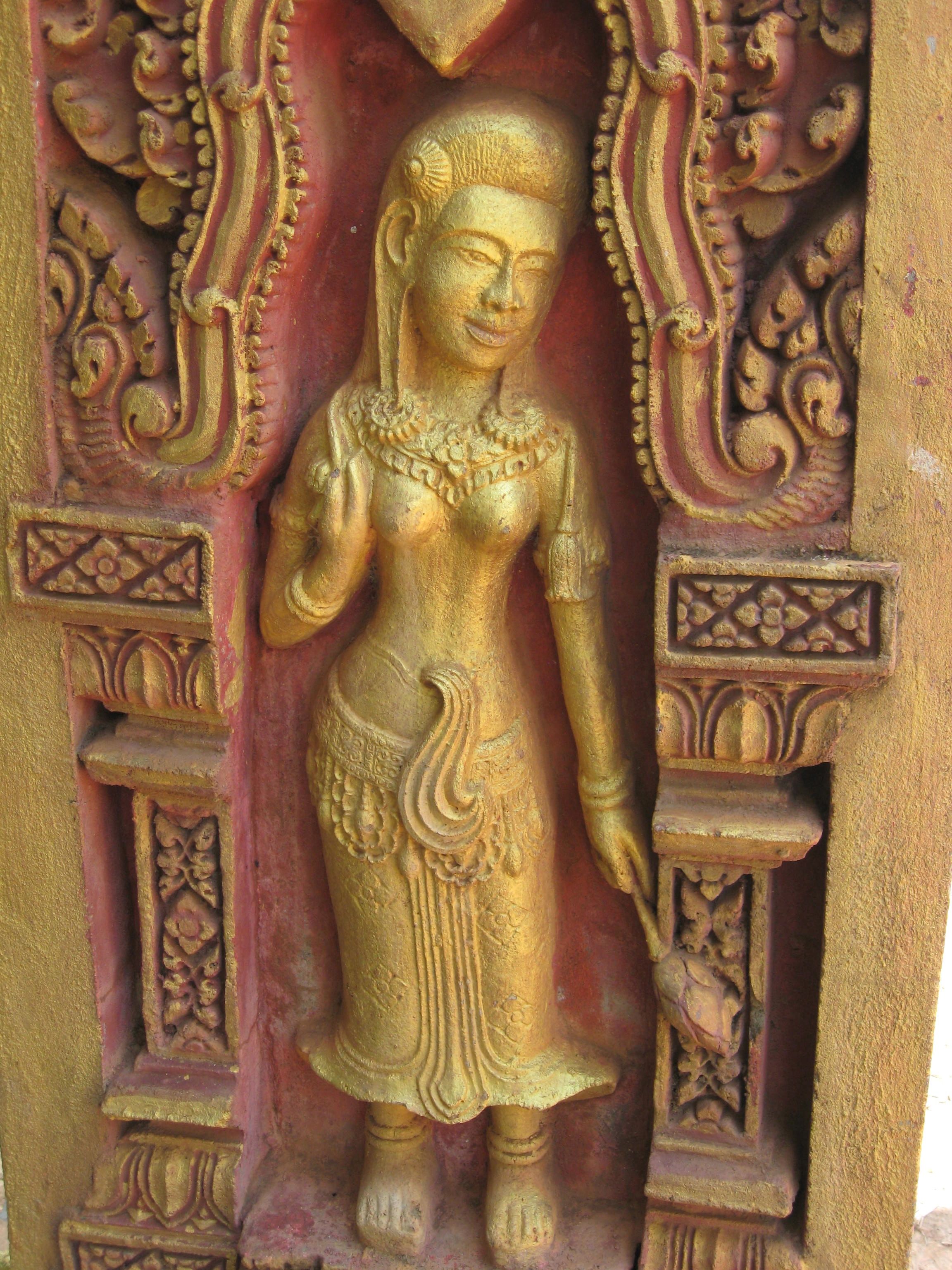
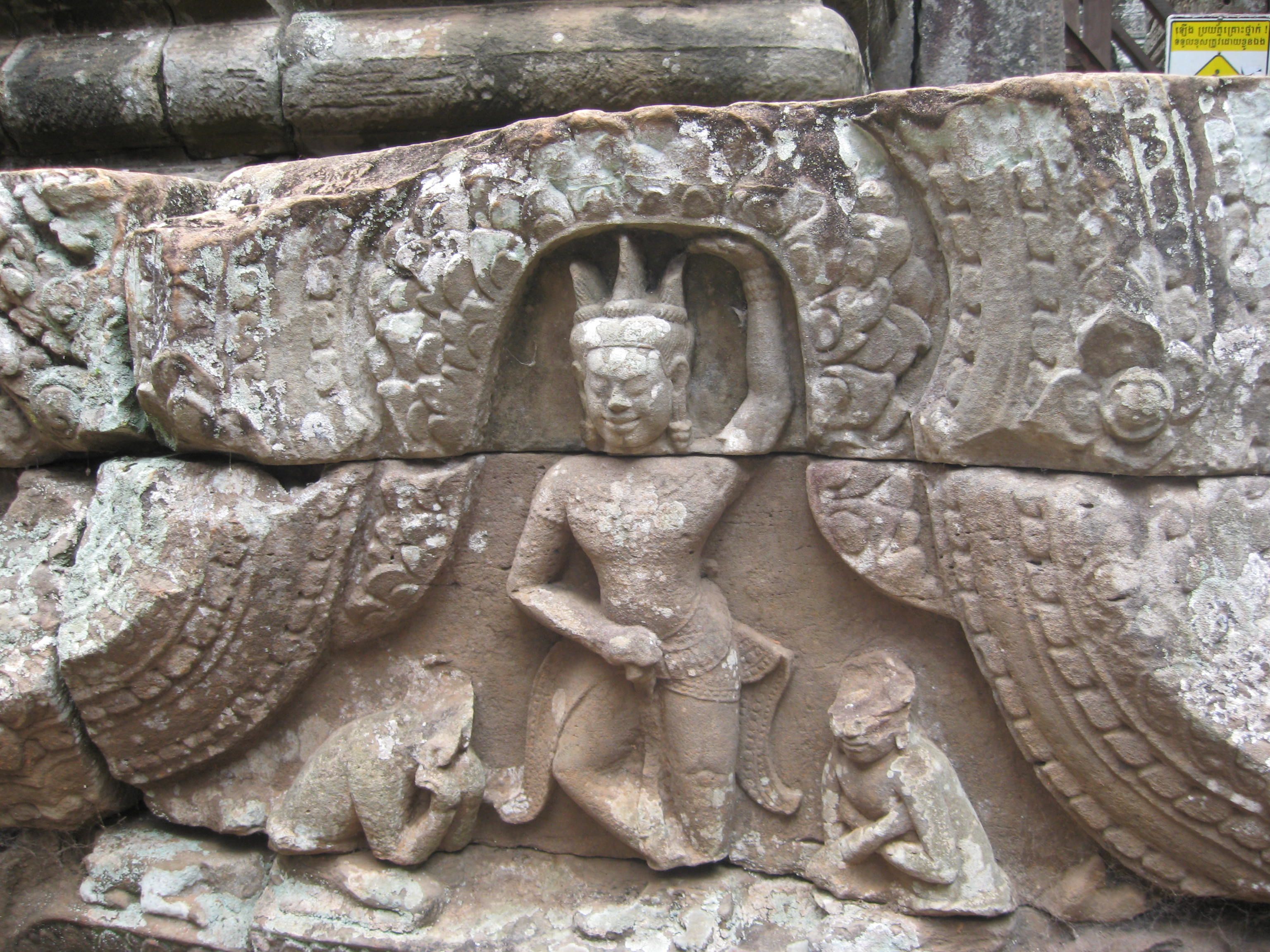
The Bucket List, as some call it, might include far away wonders of nature or the world’s famous cities.  See the Pyramids, the ruins of Rome, magnificent Angkor Wat, the Andes and Alaska.  Follow elephants in the wild before they’re gone.  Just where do you want to go and do before you ‘kick it?  I say: why base your dreams on one lifetime? There are universes out there!

What the Sphinx sees.

What the Sphinx sees.


Get started by taking a few minutes to jot down ten destinations or longer journeys that you truly want to experience within the next three to seven years.  Don’t think about the cost, child-care arrangements, your day job or financial commitments. Set your imagination free and scan a world map for your special trips.  Write a sentence  about why you want to visit these places, what influenced you to select them. Your motivation and desire.

Perhaps you’ve read a book or seen a video online that inspired you.  Remember that

©L. Peat O'Neil 2012

©L. Peat O’Neil 2012

hero or heroine from history, literature or the arts?  Regions where your ancestors lived may draw ties of personal significance.  Search your memory back to childhood for places that have dear personal meaning.  Motivation and action follow interest.

This list is your dream sheet.  It helps focus your travel plans, research and marketing.  You can always add to it, but don’t erase places you dream of seeing.  So what if there’s a war on now — things change; life goes on.  You’ll get there in a while.

The trip list is a reminder for the travel writer in you: it represents your potential and your opportunity.  Focus on your goal, put action behind it and stay confident!

IMG_6674

Posted in Culture, Geography, History, Motivation, Philosophy, Planning, Travel, Writing | Tagged , , , , , , , | 1 Comment

Race Around the World in 1889: Nellie Bly and Elizabeth Bisland

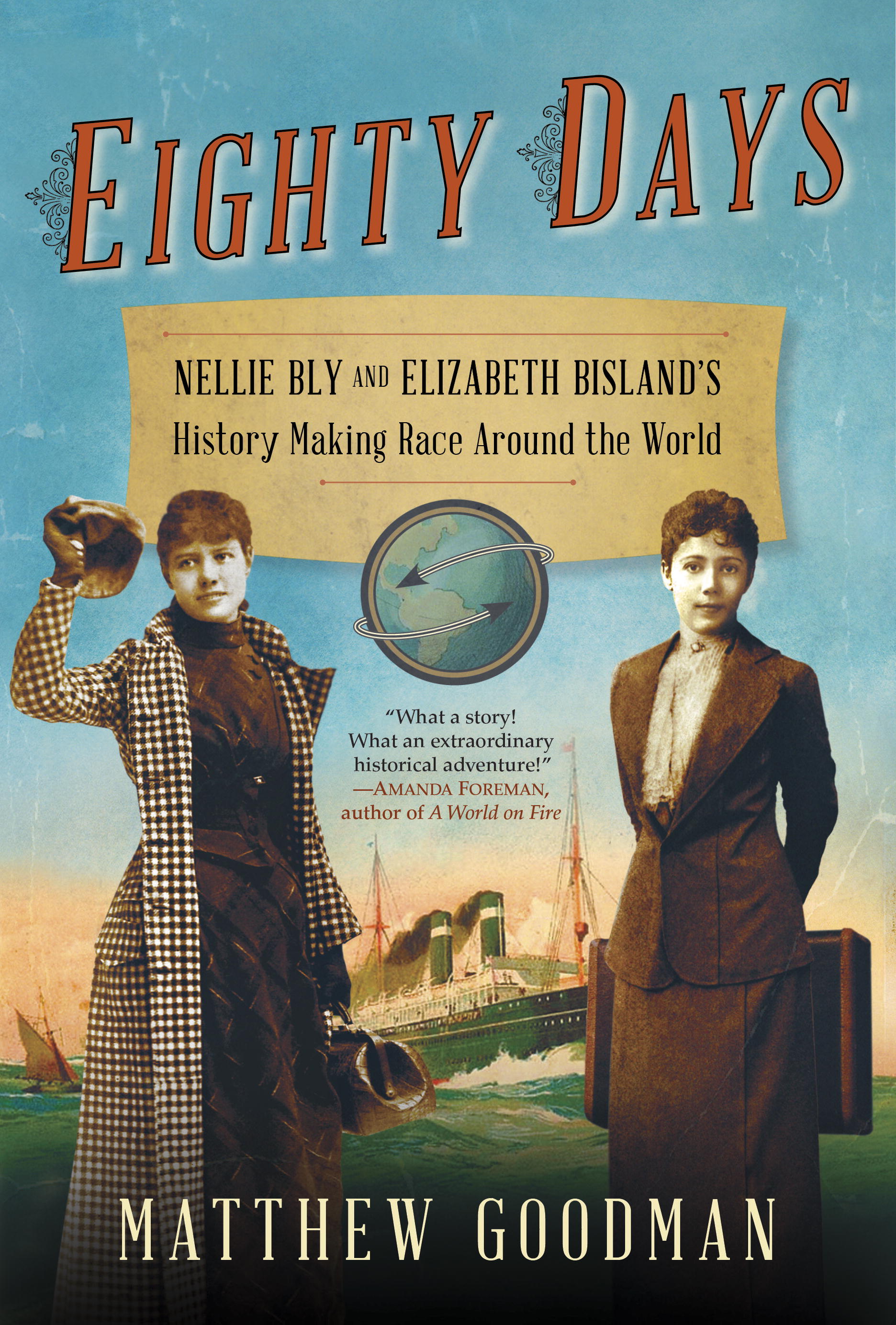
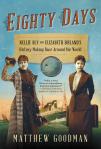
Eighty Days by Matthew Goodman

Eighty Days by Matthew Goodman

Here’s a book about adventure travel that I thoroughly enjoyed  — terrific read, thrilling trip, adventurous women — what more could one want!  Eighty Days takes its title from Jules Verne‘s serialized novel Around the World in Eighty Days, published in book form in 1873.

But — this Eighty Days is fact, not fiction.

I interviewed Matthew Goodman, the author of Eighty Days, which was published in paperback a few days ago.  The interview starts below, after a brief look at the traveling journalists, Nellie Bly and Elizabeth Bisland.

On November 14, 1889, Nellie Bly, a 25-year-old newspaper reporter, waves farewell to chilly, wet New York City from the deck of the steamship Augusta Victoria.  She’s off on her biggest story ever,  a solo global circuit against time trying to beat the fictional 80 day world trip by Phileas Fogg,  Jules Verne’s fictional hero.  Bly will head eastward across the Atlantic Ocean to Europe and Asia.  Nellie Bly was not a novice traveler; she’d lived in Mexico. Her pioneering reporting included posing as a factory worker to show harsh conditions, attempts to bribe a corrupt politician,  and acting as a mentally disturbed streetwalker. She was locked up in an asylum for the insane for nearly two weeks, then her story about it sparked a grand jury investigation of cruel conditions in public hospitals. For the global circuit, she packed ultra-light and carried one small handbag.

Nellie Bly dressed for travel, 1889.

Nellie Bly dressed for travel, 1889.

Elizabeth Bisland en route around the world, 1889.

Elizabeth Bisland en route around the world, 1889.

Meanwhile, a competing publication sweet-talked another woman journalist to race around the globe in the other direction, westward across the continental USA and the Pacific Ocean, and onward across Asia and Europe, to return to New York City before Bly.  Elizabeth Bisland was a gently-bred Louisianan, an accomplished literary essayist and 28 years old in 1889 when the world trip began.   In New York City,  Bisland was stylish and well-dressed, the toast of the city’s literary scene at that time, but she hadn’t traveled beyond the southern and eastern states.  For the race around the world, she traveled with several trunks filled with clothes and accessories for various climates. 

Newspapers and magazines sponsored sensational stories and investigative first-person accounts to expose institutional fraud and mistreatment of the poor, sick and especially of women and children.  The stories boosted circulation.  Then, as today, journalists reported stories that affect ordinary people  –  worker safety, wage equity, public services, health care and protection of children, the aged and the poor.

The amazing race featuring Nellie Bly and Elizabeth Bisland turned into a publicity windfall for the publishers and a fateful turning point in the life path of each woman.

Read more about Eighty Days at World Reader, the book review blog.

Eighty Days Matthew Goodman ColorAdventure Travel Writer interviews Matthew Goodman (MG)

ATW: Who was your favorite of the two journalists?

MG: It’s been a pleasure to discover that about half of the readers are rooting for Elizabeth Bisland and half for Nellie Bly.  I wanted to create a narrative with no heroine or villain.  I wanted two characters equally sympathetic, to compete for the reader’s affection.  Of course, the sympathy will depend on which traits you prefer.  If you like a feisty, no-nonsense hard-hitting investigative reporter —  a go-getter —  that would be Nellie. If you prefer a cool, elegant, poet-essayist, Elizabeth will appeal.

ATW: You’ve showed the women so clearly by using their journals and their books about the voyages.

MG: For me as the writer,  I wanted the women to be as interesting and complex and fascinating as they could be.  And they were that.

MG: If I had to chose one or the other, perhaps Elizabeth, only because she was less well known,  the “underdog” in terms of not yet being introduced to today’s readers.   I felt a responsibility as the first person to write about her in book form,  to present her as complex and fully as I could.  In her own time, she was an esteemed essayist and reporter.  All of her work highly regarded, including the novel based on her Louisiana upbringing.  Her essay collections are really wonderful.  Yet she has pretty much been forgotten by history.  

ATW: In the Notes section of the book,  you state emphatically “This is a work of non-fiction”. Bravo to you for making it clear that Eighty Days is a work of history and biography based on facts.  How did you discover these women from almost 125 years ago?

MG:  During my research for The Sun and the Moon…  book (The Sun and the Moon: The Remarkable True Account of Hoaxers, Showmen, Dueling Journalists, and Lunar Man-Bats in Nineteenth-Century New York), set in 1835,  I explored newspapers and journalists of the time, but the book featured males mostly.  After that, I felt that I wanted to write a book about a woman or about several women that were interesting to me.   Artistically it would be a challenge, a new experience.

While looking around for interesting women to write about,  in the course of my reading, I stumbled across a reference to Nellie Bly.  Also, I live in Brooklyn and there used to be an amusement park here, the Nellie Bly Amusement Park.  So, I knew the name, sort of knew that she was a journalist, and I was interested in reading about her. I discovered that she was not just a journalist,  but a remarkable journalist who was willing to pursue the story through all kinds of difficulties.

ATW: I noticed the structure of alternating progress on Nellie’s trip with Elizabeth’s trip serves as a great technique to keep readers engaged with the story.

I’m a narrative historian and wondered where the story would go.  I wasn’t going to write a straight biography as there was Brooke Kroeger’s  biography of Nellie Bly written in the 1990s.  I discovered Nellie had done this race around the world, against the calendar with built in adventure, excitement, and suspense.  No one had written about this journey.  As a writer I was thrilled at the  prospect of writing about these interesting places — the Suez Canal, Hong Kong, the oceans.   Subsequently, I discovered that the story was even better: it wasn’t just a race against the clock or the fictional character Phileas Fogg.  In fact another young female journalist working for rival publication, set off on the same date to beat Nellie Bly.  So there was not one story, but two, one going east, one going west.

ATW:  You probably know that Nellie Bly’s travel bag is on display at the Newseum in Washington, D.C. but I don’t think she’s widely remembered for her pioneering investigations.

MG: Nellie is somewhat better known in New York City than elsewhere, because she did her best reporting here.  Her name is sort of familiar as the kind of female character seen as an inspiration to girls.  A women might remember a book about Nellie Bly that she read back in 4th grade.  But as people get older, they forget the details.

ATW: When you discussed the project, what types of reactions did you hear?

MG: Many people knew Nellie Bly’s name, and were intrigued to know more.  One of my gratifications in the writing was to reintroduce Nellie Bly to a new generation.  And I was pleased to be able to bring forward Elizabeth Bisland’s life and writing.

ATW:   Did you have to cut any portions of your book that you were attached to ?

MG:   The Lafcadio Hearn research was important to understand Elizabeth Bisland during her time in New Orleans.  I did quite a bit of research on him and his relationship with Elizabeth.  Ultimately, I had to dispense with this intriguing person because is wasn’t really germane to the story.  Lafcadio Hearn got Elizabeth interested in the far east during their conversations in New Orleans. Later, she edited his letters, most of which were from Japan [where he later established himself and remains a treasured literary figure].  For Elizabeth, one of the great benefits of the race, the prime benefit, was that it kindled in her a love of travel and in particular,  a love of the far east.

ATW: Elizabeth traveled to Japan a couple times in her later life.  I wonder if she visited Lafcadio and his family in Tokyo?

MG:  Possibly,  I may recall reading that Lafcadio Hearn left for Japan around the time  Elizabeth was on the around-the-world race. She and her husband would have visited them years later.

ATW:  The book features evocative writing about historic locations.  The newspaper districts in New York City and New Orleans come alive,  as do noisy ports and markets.

MG:  As I mentioned earlier, the fact that I would be able to write about all of these places was so fascinating to me.  I spent a lot of time researching each of the places to which they went, trying to create these places vividly in my mind so I could put them on the page.  What did the Hong Kong waterfront look like in the 1880s? Or Jules Verne’s estate, or the Suez Canal?   I did I all that I could to find out what these places looked and felt like at that time.  I used old travel guidebooks to discover what an historian traveling in a different time would see.  Those guidebooks do tell you what the buildings looked like, where the hotels were, where the restaurants were at that time, the native customs and walking tours in the old guidebooks described the local neighborhoods.

ATW: I noticed how you worked in the prejudicial attitudes of the time.

MG: I sought a granular ground level view by reading other travelers’ account from around the same time period.  And I used old photos, absolutely, to get a feel for how people lived and worked in the various locations.  I researched newspapers from those places — the British colonies where the papers were published in English.

ATW: I wondered about Nellie’s aversion to English people? Was she reacting to the snubs by British travelers on the Suez Canal portion of the journey?

MG:  I think it dates back further than that.  She was a working class Irish girl and aversion to British was very strong among Irish people in the U.S., especially in New York.  She was prone to be anti-British.   Nellie Bly was someone who was very proud and nationalistic.  She was very proud of being an American, even chauvinistic.

ATW: During World War I,  she lived in Vienna – that was a surprise.

MG: She tended to support the Germans.  I write how her secretaries,  during the years she was helping destitute New Yorkers and immigrants,  would not send anyone upstairs to see her if they had even a hint of a British accent.

ATW:  Interesting that both women pursued charitable works in their later years and both died in the 1920s.

MG: By the end of her life Nellie Bly had come back to her earlier sense of newspaper reporting and helping people through good works.  And Elizabeth Bisland wrote rather wonderful essays as well as editing Lafcadio Hearn’s letters.

End of interview.
Posted in Books, Geography, History, Hot Climates, Travel, Writing | Tagged , , , , , , , | 3 Comments

Do Trekking Poles Help You Walk?

Hiking in New Zealand

Hiking in New Zealand

“You don’t need sticks!” a British mountaineering friend announced with a hint of scorn in his voice.  We were reviewing pre-hike gear for a Lake District holiday.  Able bodied adult hikers should wear stout boots, carry a small pack with food, water and gear for weather changes.  And march upright with a stiff upper lip.  

Some veteran hikers view hiking poles as thin crutches.  Maybe people with slack thighs, shakey ankles, weak knees or a creaky lower back should train in a gym first.

For the first part of my cross-country solo hike across France through the Pyrenees Mountains, I didn’t use trekking poles and didn’t think I needed them either.

But I did notice — in Cauterets and other mountain towns — hikers walking with poles. Though to my eyes, they looked a little funny, like storks or skiers who forgot their skis. Yet they were able to rapidly ascend, creating a cadence with the poles, much like cross-country skiers use poles for balance, thrust and rhythm. European hikers also use poles (or sticks as my British friend called them) to build and tone upper-body strength and push aerobic activity.

Trekking pole can support a shelter.

Trekking pole can support a shelter.

After I broke my right wrist during a fall in a mountain stream, I revisited my superior attitude towards hiking poles. Might I have stayed upright and not slipped on the rocks had I used a hiking pole?

Though I couldn’t bring myself to use two poles, still considering it a tad dorky, I compromised with one pole. When I returned to the long through-trail to the Mediterranean, I brought along a retractible pole with a cork grip and pointed metal extension tip on the bottom. I wrapped a supply of florescent duct tape around a small area of the pole shaft, for emergency use.  In a pinch you can use poles to support a three-point tarp shelter.

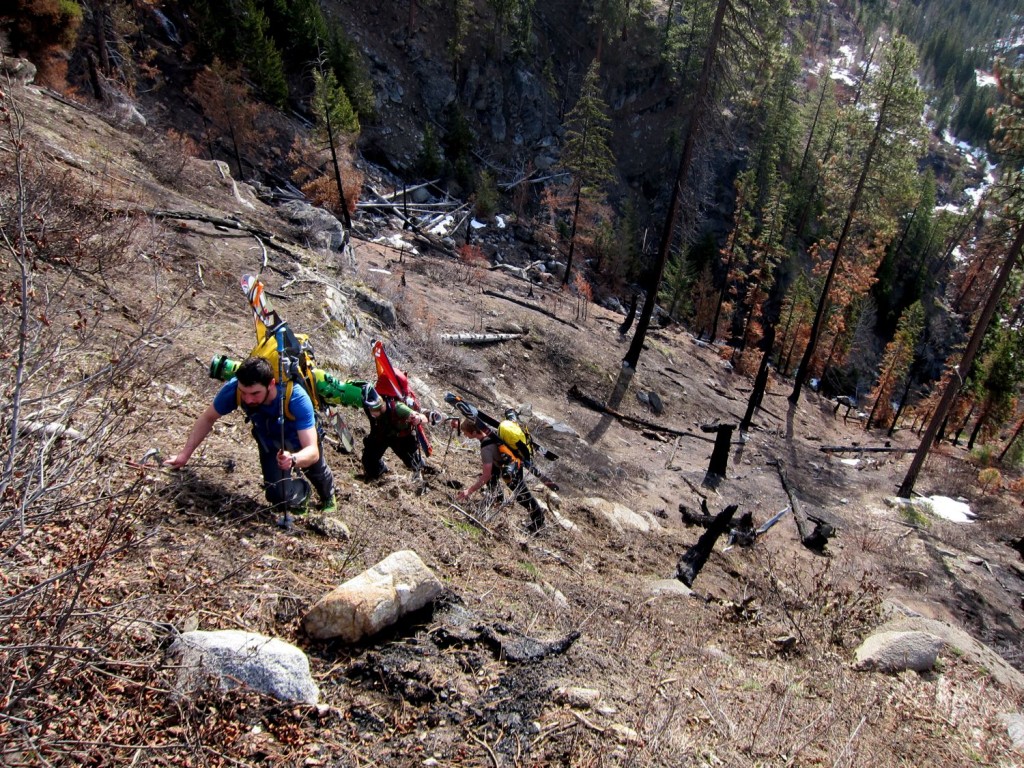
Use trekking poles on extreme inclines.

Use trekking poles on extreme inclines.

Hiking poles increase stability on downhill surfaces and extreme inclines.  They serve as extra “feet” when traversing exposed scree, mud, loess, ice or other unstable surfaces, the poles do the trick. My toes and shins didn’t experience the same degree of pressure on steep downhill walks. The pole helped me on ascents too when the pack’s weight worked against me, pulling backwards, while the pole offered traction.

I bought my pole at REI when hiking poles weren’t yet standard outdoors equipment in the USA. Now, any sporting goods or outdoors supply stores will probably carry several types of hiking poles. And don’t forget the countless online outdoor equipment suppliers.
Select hiking poles that are:

  • Retractible – useful for packing or storage.
  • Lock securely prior to each use
  • Anti-shock or have “give” on impact to save your arms, wrists and hands
  • Tripods for photography – optional multi use
  • Durably painted so paint doesn’t flake off

Read more about how to travel Travel Writing: See the World, Sell the Story

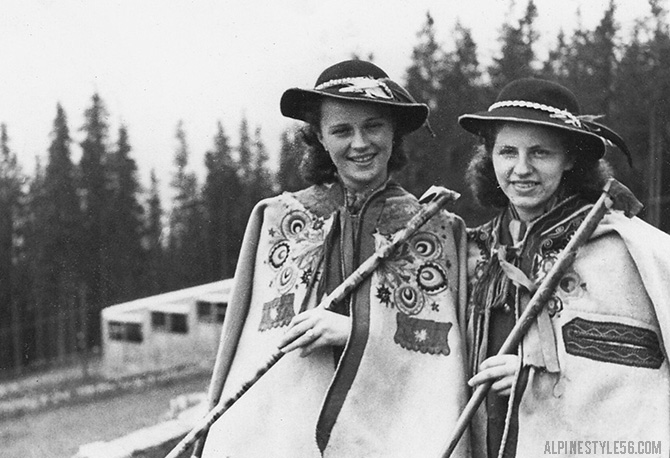
Alpine hikers with vintage trekking poles. Image: hikingstyle56.com

Alpine hikers with vintage trekking poles.
Image: hikingstyle56.com

Posted in Travel, Walking | Tagged , , , , | Leave a comment

Meet People :: Get Your Hands Dirty :: The World :: Close to Home

Meet People * Cultural Programs * Volunteer * Work Exchange * Travel 

 …get started with your dream of helping people and reaching out….meeting new friends….BE the change you want

Volunteers change everything for the better

Volunteers change everything for the better


Applications accepted during July, 2014

Virtual Student Foreign Service – online  intern volunteers assist U.S. Department of State and other U.S. government agencies with projects.


American Friends Service Committee * Blackfeet Indian Reservation and Other Programs

Continental Divide Trail 

*Council on International Educational Exchange  *Cross Cultural Solutions

*Frontiers Foundation – Northwest Territories, Nunavit, Canada

 *Global Service   *International Executive Service Corps  *Journeys for Good

*Medecins Sans Frontieres   *National Outdoor Leadership School

 *People to People International *Pyxera Global – New Global Citizens  *Servas International 

*Teach for America * Volunteer Match WorkAway  *World Wide Opportunities on Organic Farms


world changers
Posted in Budget Travel, Education, Networking, Organizations | Tagged , , , , , , , , , , , , , | Leave a comment

Washington DC Walks

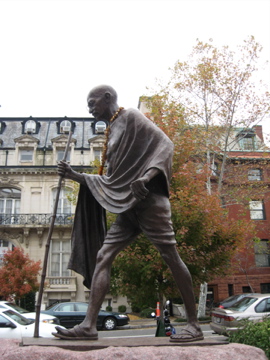
Statue of Mahatma Ghandi in walking mode installed adjacent to Embassy Row -  Massachusetts Ave. NW near Dupont Circle.

Statue of Mahatma Ghandi in walking mode installed adjacent to Embassy Row – Massachusetts Ave. NW near Dupont Circle.

The best long distance walking path in the Washington DC area  is the C&O Canal National Park. Except for a short stretch through lower Georgetown where the water is often low and litter occasionally piles up, the C&O Canal on the Maryland side of the Potomac River is a splendid stretch of Nature’s Bounty.  You can walk nearly 200 miles without turning around in this National Park.  

On the opposite side of the Potomac, the path along The Pawtowmack Canal also known as the Great Falls Canal on the Virginia side of the Potomac River isn’t as well known.  Segments of this canal were built on the instruction of George Washington and never completed. Kayakers not yet ready for the really challenging river rapids use the canal on the Virginia side for skill development.
 
Rock Creek Park  offers the serene pleasures of a rare urban forest accessible by public transport. Consult maps before deciding which Metro station or bus line to use for access to Rock Creek Park.
The Capital Crescent Trail is usually busy on weekends, but just a few blocks from Bethesda Metro station.
Virginia’s northern suburbs offer the urban hiker many choices: the WD&O trail, the Mount Vernon Trail and Huntley- Meadows Park The Potomac-Appalachian Trail Club maintains the  Bull Run-Occoquan Trail in Virginia
 
A few of these trail networks are extensive, long enough for multi-day excursions with overnight stays in nearby inns, motels or camping.  Pick short segments suitable for half day and day hikes.
Posted in Outdoors Life, Walking | Tagged , , , , , , , | Leave a comment

Panama Canal :: Do It Yourself

Viewing the Panama Canal from a cruise ship might not be the best vista.   Canal bound cruise ships are so large and the decks so far above the water line that you can’t see the interesting activity below in the lock passages.

Boat tours of the Canal locks are offered by various providers.  I went with Argo Tours on a partial transit, the only option on the day I contacted them.  I couldn’t find a web link to Argo recently, so maybe their name or management has changed, but whoever offers the canal lock passage tours, the experience is worthwhile.  The food was much better than I expected for a tour boat, and plenty of it.  A bilingual guide explained the history, natural lore, and mechanical process of the lock transfers.

Panama Canal at Gatun Lock. image courtesy of Commons Wikimedia.org

I had hoped to walk the isthmus on a long distance path I’d read about.  Further research showed the path was overgrown in parts and a machete carrying guide might be necessary.  Nor did I have success hunting down topographic maps sufficiently detailed for a solo walker.

Next time I find myself in Panama, I plan to ride the Panama Canal Railroad which has been refurbished for the tourist trade.  It will offer another perspective of travel across the isthmus.

Prior to exploring the Canal area, I spent several days at Bocas del Toro  on the Carribbean side and enjoyed a 1 day island boat-snorkel tour  offered by several tour operators in Bocas. Make sure you hire a boat with a canopy as the sun can be fierce.

Bocas del Toro floating settlements. © Air Panama

Another day, I flew from Panama City to Isla Coronado in the Pacific for an overnight in a spiffy cliffside beach hotel.  Various high-level international refugees have stayed there —  the Shah of Iran, possibly Manuel Noriega and other shady characters.

On one of the weekends, friends of Experience Panama tourism guru Ana Rojo invited me to join them for the cross country drive  west-north-west to Boquet in the highlands, for cooler temperatures, ranch-style living and coffee plantations. Isla Verde guest house is nice there — run by a friendly German family.  The hike up the mountain is worth the effort.

In Panama City, use good sense and hire a car and driver to view the tourist highlights, because public transport can be problematic unless you have lots of time to sit around and wait.  Cabbies can be helpful, or not.  I rode city buses a couple of times and boarded efficient inter-city buses to reach Bocas del Toro from Boquete.

The Smithsonian operates a world-class tropical research institute at Barro Colorado, an island in Gatun Lake.    The day was interesting, but we were kept close to the administrative buildings.  Experienced hiker-naturalists might find the nature walk a disappointment.

If you can get a room, book into the Country Inn and Suites Hotel (an American style business hotel with the usual discounts for AAA, government/military and seniors) because of the direct view of the Canal and all the ships.  For me, that made the trip, to be able to look up from the balcony and see a tanker nosing through the canal, or the sun setting over the tropical forest on the opposite side of the canal.

Panama - Amador CausewayA 6 km causeway made from dirt excavated from the canal runs alongside the canal, open to pedestrians and cyclists.  At the end of the causeway, there’s a handful of charming islands, one of which is a small Smithsonian marine research/education facility, converted from a WWII-era lookout station.  The recreational port  area attracts sightseers and  the marina area is bracketed by seafood restaurants.  For me, it was restful to walk along the causeway, maybe visit the marine research island, have a snack at one of the restaurants and walk back to the CountryInn Suites hotel then finish up the evening looking at the canal  during twilight.  All along the causeway, sea breezes rustle the palm trees and folks of all generations run, rollerblade, walk and cycle.

The birdwatching at Canopy Tower and nearby trails is incomparable.   Panama offers many national parks, though transportation to the parks could present a logistical hurdle.

Travel Tips.  Bring along a roll of $1 and $5 US banknotes.  For some reason it was hard to get singles and that’s what you need in this tip driven economy.  US currency is used throughout and some prices were quite modest,  except for classy hotels in the city and resort areas.  If you do find yourself taking taxis, be aware that the first rate quoted by the driver is the tourist price and the normal price is perhaps 1/4. ( e.g. for a $1.25 cab ride, 8 minutes travel time, the driver will quote me, Miss Gringo Tourist, $7.00, then come down to $5.00 and even when I offer $3.00, will still try and get me to agree to a “tour”.

Posted in Budget Travel, Geography, History, Hot Climates, Nature, Travel | Tagged , , , , , , , | Leave a comment

How to Travel :: The First Day

Diagram of light's effect on human physiology and behavior. Courtesy Wikipedia

Diagram of light’s effect on human physiology and behavior. Courtesy Wikipedia

Travelers complain they feel tired on the first few days of a trip, even in nearby time zones.  That’s normal — the rush to depart brings extra chores and an effort at work to get everything done.   Add the hyper-chilled or overheated environments of most transportation facilities and your body is crying the blues.

Adjusting your body to the new time zone can be jump started prior to departure by changing your sleep and waking times to fit the destination. Reset your watch to the new time zone as soon as you enter the aircraft.  Health professionals recommend avoiding stimulants like alcohol, coffee, cola and tea before bedtime, but I use a shot of cognac to put me out. Drink lots of water or juice; avoid carbonated soft drinks which insult the digestive system.

Get out in daylight on your first day.  Settle in with your hosts or at the losing and hop outside for a walk.  If you’re too tired and it’s warm enough, lounge around in daylight.  That’s the key to resetting the body’s natural sleep-waking rhythms.  Exercise helps regulate your body too.

During the journey, if you are trapped inside airports because of weather delays, layovers or connecting flights, put in a mile or two walking the terminal halls.  Keep moving.

At your destination, don’t skip time under the sky just because it is overcast.  The sun is still doing its work.  Exposure to daylight is the main factor in adjusting your circadian pattern to the new time zone.

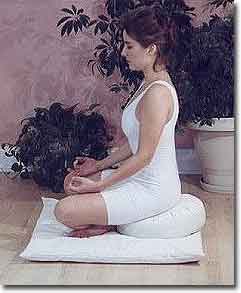
Another helpful practice is to replicate bedtime and waking rituals that you can maintain while traveling overnight away from home.  If you stretch or meditate, do the same away from home.  Bring what you need to feel comfortable.  Ask the hotel to reserve a quiet room, specify non-smoking, arrange for two wake up calls in case you miss one.  Bring a family talisman, a favorite small pillow, scented candle or your own cup to make the temporary environment more familiar.  I bring a colorful cloth to shade the bedside lamp.

Calm yourself after stormy travel.

Calm yourself after stormy travel.

Stretching and exercise will improve your  physical well being. If you can, go easy the first couple of days. Head to bed when you’re tired and sleep until you awaken naturally.

The most important tips are get out under the daylight at the destination and drink lots of purified water, unless you are certain the tap water is safe.

Read more about how to travel brilliantly in:  Travel Writing: See the World, Sell the Story 

Posted in Travel | Tagged , , , , | 2 Comments

Coastal Kayaking

Coastal Sea Kayaking

http://en.wikipedia.org/wiki/Rappahannock_River

Rappahannock River, Virginia. Image: WkimediaCommons

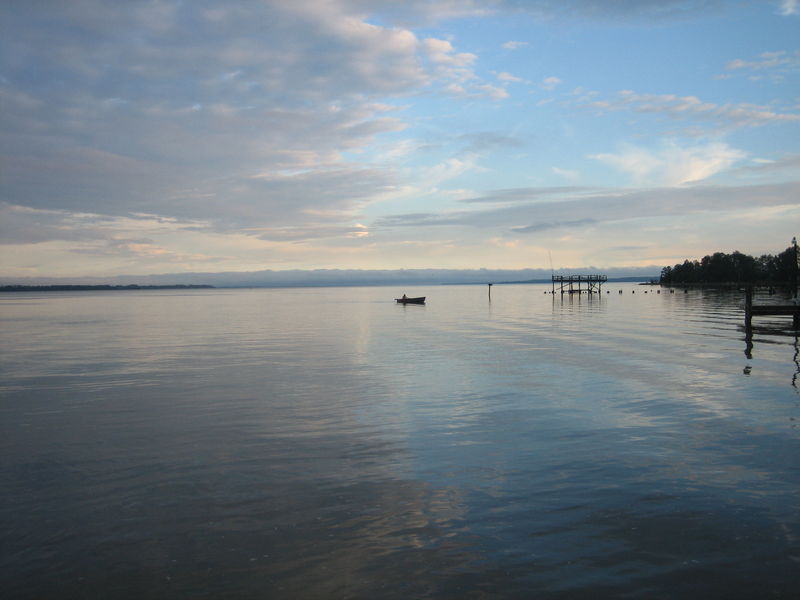
Pushing to the edge of sunset, I’m paddling a sea kayak on a tributary of a Florida wilderness area, along the Eastern Shore coves of the Chesapeake Bay,  past coastal South Carolina barrier islands, or heading to a nature preserve on the St. Lawrence River in Quebec.

Seated so low it feels like I’m in the water, I dip the double bladed paddle quietly, cutting the slate blue water with a rotate and a thrust. This is sea kayaking at its best, serene and solitary, a moving meditation.

Life’s splendid experience :: to be one with moving water.
***

Resources:

Chesapeake Bay Paddlers Association

South Carolina Coastal Expeditions

Travel and Kayaking Books

Florida Sea Kayaking Resources

Montreal Canoeing & Sea Kayaking

Sea Kayaker Magazine

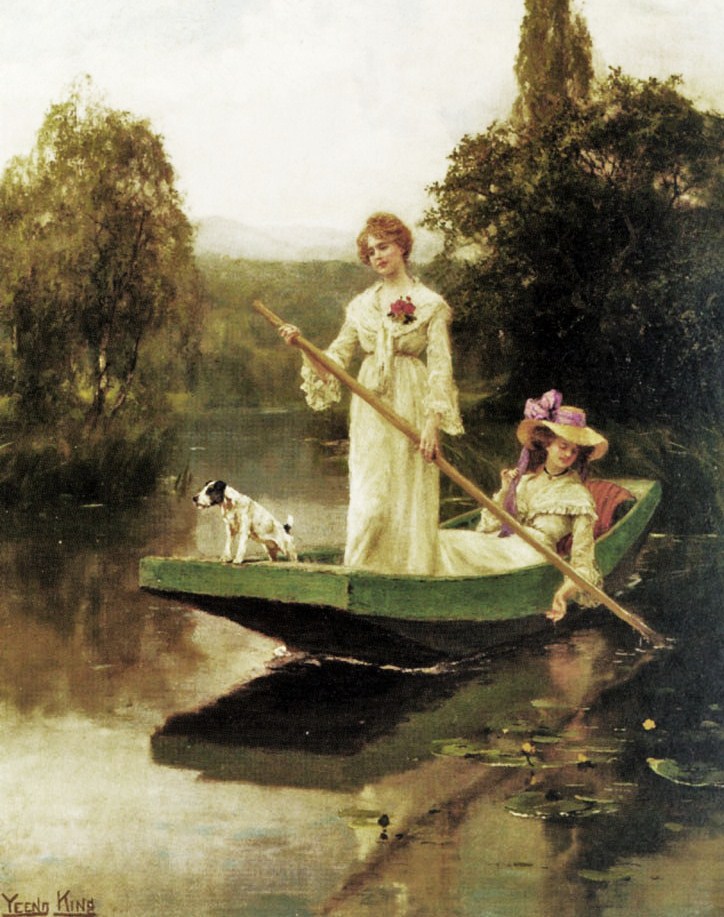
Women dressed in flowing summer frocks pole a flat boat on a river.

Two Ladies Punting painted by Henry John Yeend King (1855-1924).

Posted in Budget Travel, Geography, Nature, Outdoors Life, Travel | Tagged , , , , , , | Leave a comment

15 Travel + Memoir Writing Contests

Travel Writer’s Awards and Contests

The Guardian (UK) Travel Writing Competition – for amateur travel writers

We Said Go Travel Writing Contest

WanderWomen Travel Writing Contest – Wanderlust and Lipstick

Fish Publishing Short Memoir Writing Contest

Safari Bucket List Travel Writer Competition

North American Travel Journalists Association Awards

You can do this!

You can do this!

Canada’s Northern Lights Travel Writing Awards

The Telegraph (UK ) “Just Back” Competition

Pacific Northwest Writers Association Writing Contest

PATA Gold Awards — Pacific Asia Travel Association

International Food, Wine & Travel Writers Association

Society of American Travel Writers

InTravel Magazine Writing Contest

Solas Best Travel Writing Awards – Due: September 21, 2014

Posted in Awards, Contests, Freelance Writing, Organizations, Publications, Social Media, Travel, Writing | Tagged , , , , | 2 Comments

Zen of Travel Writing

Picture Library to 2008 159When I need time to reflect on what I’ve seen,  to process incoming information, I take a long walk without my notebook and let thoughts  flow.

If anything really important comes to mind, it can be written down when I get back to my room or bolt hole.

The idea is to release myself from the pressures of having to notice and write.  Usually, a couple of hours “off duty” provides a fresh start.

Interesting that some of my most compelling travel encounters happened while I was just wandering without a particular objective. Just be where you are, with calm awareness.

Trust that you’ll find enough material to write about, so that you can take time away from your plans and objectives.

As  Shunryu Suzuki writes in   Zen Mind, Beginner’s Mind,

“When you do something, if you fix your mind on the activity with some confidence, the quality of your state of mind is the activity itself.  When you are concentrated on the quality of your being, you are prepared for the activity.”

Make time to focus on yourself and how you are feeling as a traveler,  then inspiration and activity will emerge. Concentrate on sensing yourself in the place where you are, noticing all that is going around you.  Put your energy into your senses, so that your eyes, ears, nose, skin and mouth take in all the ambient information. Prepare yourself to be an attentive observer and you will be doing the activity itself.

Excerpt from:  Travel Writing: See the World, Sell the Story

Posted in Books, Culture, Freelance Writing, Philosophy, Travel, Writing | Tagged , , , , , , | Leave a comment