Nature and Spiritual Practice

Spirituality in nature is implied, but not directly addressed. Nature has replaced the craving for a spirit presence greater than the self. Nature envelops and includes, while a named almighty being (God, Jesus, Zeus, Allah) is defined and apart from humans.
Nature is personal yet all inclusive. Could the perception of a god be valid? Because of the centuries of oppressive definition and lack of sensual participation, that god entity lacks impact. Nature, though, is always, everywhere and constantly tangible. In Nature we trust.

Find god in the details.  Write from the heart and soul-mind.

Posted in Travel Knowledge | Tagged , , , , | Leave a comment

Websites on Nature

Selected Opportunities and Resources for Nature Writers

Nature in Legend and Story (NILAS) is a non-profit, tax-exempt organization, devoted to exploration of relationships between human beings and the natural world, reflected in folklore, literature and other cultural activities with spiritual focus.

The Nature Web from Nature Magazine.

EPA Grants – public environmental education.

Association for the Study of Literature and Environment (ASLE) 
promotes the exchange of ideas and information about literature that considers human relationships with the natural world.

Forums on nature and birdwatching topics

For freelance writers:  Links to writer’s guidelines for nature related periodicals.

Posted in Travel Knowledge | Tagged , , , , , , , , | Leave a comment

Tip for Writers :: Tracking Your Publications

Writers, do you police your byline?

I was looking up various topics at the Library of Congress where you can rove through the electronic resources.  As usual, I also searched my byline in WorldCat. What did I find but a 2008 edition of my non-fiction book “Travel Writing – See the World, Sell the Story: published by F+W Publications.

It was a Japanese version!  An earlier edition of the book had been published in Italian some years ago, and in Chinese more than a decade ago. The Japanese text was news to me.

Naturally, I sent a flash-mail to the contract and royalties manager at my book’s publisher. My mind raced. Was it an oversight, I asked myself? A case of stiff-the-writer? Copyright infringement?

Not at all. It turned out that I had not noticed on the semi-annual royalty statement that the Japanese foreign language publication rights had been sold. If you are wondering why I didn’t notice, foreign language rights for a non-fiction trade text don’t yield much of a payment to the author.

My next step was to ensure that I would receive the 6 free copies of all foreign language editions of my work, as established in the original contract.

So, don’t forget to check your byline regularly in many databases. The easiest way to get started is to put your byline in the Google search field and examine the returns carefully.

Details on the Japanese version:

旅行ライター入門講座 : わが国初の本格的トラベルライティングの教科書旅行ライターとして旅立ちたいあなたへ /

Ryokō raitā nyūmon kōza :
wagakuni hatsu no honkakuteki toraberu raitingu no kyōkasho ryokō raitā to shite tabidachitai anata e /

ピート・オニール. 池田豊信. 福本直美.

L Peat O’Neil; Toyonobu Ikeda; Naomi Fukumoto

2008 Japanese Book Internet Resource 360p.; 21 cm.

Tokyo:Baperupuresu,; ISBN: 9784894490819 4894490811

English version of Travel Writing, See the World-Sell the Story by L. Peat O’Neil

Posted in Travel Knowledge | Tagged , , , | Leave a comment

Environmental Issues and Nature Writing :: Self Directed Study


Web resources on Nature Writing  — study on your own with a syllabus and course materials compiled by top universities.

MIT — Massachusetts Institute of Technology — offers a free online course Writing About Nature and Environmental Issues. 

The University of Indiana, Bloomington offers a study guide and resources on nature writing.

Posted in Travel Knowledge | Tagged , , | Leave a comment

We are Not Weeds

New York Times book review  reminds us that weeds are necessary.  Some offer excellent nutrition  — elderberry, dandelion, young polk leaves.

Posted in Travel Knowledge | Tagged | Leave a comment

Snowmageddon Maryland February 2010


Posted by Picasa
Posted in Travel Knowledge | Tagged , , | Leave a comment

Environmental Movement in China


Photos from China

Gulangyu Island

where cars are not permitted ……
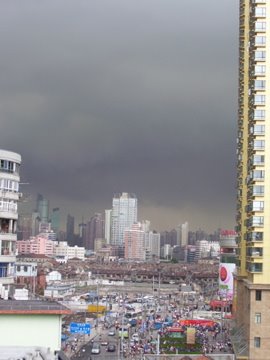
and Shanghai, where cars rule.

Posted in Travel Knowledge | Tagged , , , , , , | Leave a comment

Nature Writing Exercise


A few thoughts to start your thoughts about your relationship with nature and the natural world:
What is your first memory of nature or the outdoors?
What is the role of the writer in observing and reporting about the natural world?
Do you think a nature or outdoors writer has a role as a spiritual caretaker for the earth and the universe?
Does the writer or artist have a responsibility for nature beyond that of the scientist?
Describe the intersection of creativity and responsibility.
Does a nature writer need to maintain the same exacting standards of truth as a scientist?
Posted in Travel Knowledge | Tagged , , , , | 1 Comment

To Read :: Nature Writing


The Literature of Nature — Reading List


This list is a highly personal selection of some of the books about nature and related subjects that I use for inspiration, information and development. Not a comprehensive list!

Add to it through the comments function.

Many of the authors listed here have written other works with an environmental focus.

And dozens of superb nature writers who write in languages other than English are not on this list.


The Serpents of Paradise, Edward Abbey, Henry Holt and Co. 1995

A Natural History of the Senses, Diane Ackerman, Vintage Books, 1991

The Beauty of the Beastly, Natalie Angier, Houghton Mifflin, 1995

The Selfish Gene, Richard Dawkins, Oxford University Press, 1976

Pilgrim at Tinker Creek, Annie Dillard, Harper & Row Perennial Library, 1985, originally published 1974

A Match to the Heart, Gretel Ehrlich, Penguin Books, 1995

Woman and Nature, Susan Griffin, Harper, 1978

Spring in Washington, Louis J. Halle, Johns Hopkins University Press, 1988

The Experience of Place, Tony Hiss, Vintage Books, 1991

Women on Hunting, edited by Pam Houston, Ecco Press, 1995

Broadsides from the Other Orders, A Books of Bugs, Sue Hubbell, Random House, 1993

The Mind of the Dolphin, John Cunningham Lilly, Avon Books, 1969

Indian Country, Peter Matthiessen, Penguin Books, 1992

The Way of the Earth, T. C. McLuhan, Simon & Schuster, 1994

Encounters with the Archdruid, John McPhee, Farrar, Straus and Giroux, 1971

One Man’s Garden, Henry Mitchell, Houghton Mifflin, 1992

The Cuiise of the Corwin, John Muir, Sierra Club Books 1993, originally published 1917

Soungbirds, Truffles, and Wolves, Gary Paul Nabhan, Penguin, 1993

Spiritual Ecology, A Guide to Reconnecting with Nature, Jim Nollman, Bantam Books, 1990

Why We Garden, Jim Nollman, Henry Hold and Co. 1994

Who Speaks for Earth, edited by Maurice F. Strong, W. W. Norton & Co. 1973

Earthly Pleasures, Roger B. Swain, Charles Scribners, 1981

Life and Death of the Salt Marsh, John and Mildred Teal, Ballantine Books, 1971

Lives of a Cell, Lewis Thomas,

Walden and Other Writings, Henry David Thoreau, Bantam, 1961, originally self-published, 1853

Letters from the Earth, Mark Twain (Samuel Clemens)Fawcett, 1962, originally published 1938

Beautiful Swimmers, William W. Warner, Penguin, 1976

Onward and Upward in the Garden, Katharine S. White, Farar, Straus, Giroux, 1979, originally pub. 1958

Naturalist, Edward O. Wilson, Island Press, 1994

Posted in Travel Knowledge | 1 Comment

Books About Nature Writing

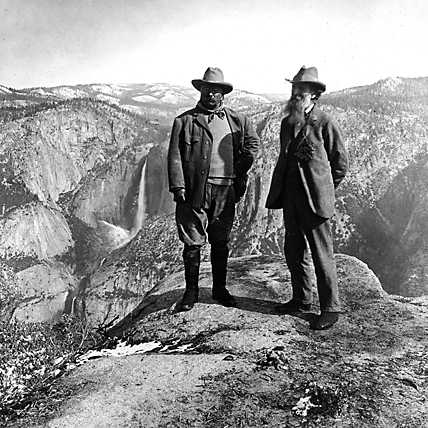
Productive mountaintop dialogue between conservationist Theodore Roosevelt (left) and progressive preservationist
John Muir (right). photo courtesy of the Library of Congress

Keeping a Nature Journal

Clare Walker Leslie and Charles E. Roth, forward by Edward O. Wilson

Storey Books, Pownal, Vt.

2000, $16.95, 181 pages including subject index

Large format , 14 pt font.

Wonderfully illustrated with sketches from nature. Mostly aimed at the person who will sketch the observations, though writing is incorporated. Free form, to include newspaper clippings, feathers leaves and other materials found in the wild. Includes drawing exercises, breaking down parts of an insect or household pets, acorns, birds, flowers and trees, landscapes. Section on teaching nature journal writing to groups of all ages and in particular, children. Resources include bibliography, national wildlife and nature organizations, brief survey of early nature journalists. Suggested assessments for teachers using the book in class.


Being in the World:An Environmental Reader for Writers

Scott H. Slovic, Terrell F. Dixon

Macmillan, NY

1993, 725 pages, including author and title index


“Most people are ‘on’ the world, not in it–have no conscious sympathy or relationship to anything about them–undiffused, separate, and rigidly alone like marbles of polished stone, touching but separate.”

John Muir, Journal entry, July 16, 1890

A comprehensive anthology for use in the environmental education setting. Natural history literature.

Intended, the authors writer “for students on beginning composition courses and advanced workshops in literary nonfiction, offering opportunities to experiment with a wide range of rhetorical modes. For English, Environmental studies students. Chapters broken into topics such as: Encounters with the Otherness, Fedcundity and Mortality, Nearby Nature, Walking: On the Trail and Off, Climbing: Mountain Narratives

Index of rhetorical contents: analysis and interpretation; argument and persuasion;cause and effect;

comparison and contrast; definition;description; division and classification; humor; narration;process analysis


Geographic coverage offers: two narratives in the far North, a handful in the Great Plains, and surprisingly few from the Northeast, Pacific Northwest, and about a dozen from the South, most examples are set in American Southwest and California. The international section has 11 pieces. The authors describe it as a “medium sized reader with 83 selections and general introduction to environmental writing, chapter introductions, biographical and critical head notes, points for analyzing and discussing the text, writing assignments drawing on the readings.” Target audience is clearly in a classroom setting. Style is pedantic and format physically cumbersome which would not appeal to the individual writer-reader. A glossary of critical terms is included.


Beyond Ecophobia, Reclaiming the Heart in Nature Education

David Sobel

Nature Literacy Series, publication of the Orion Society, 1996

Great Barrington, MA

A monograph of 45 pages including a reading list for children and references.

Text explains how to introduce children to nature and the environment at various ages, building on foundation of empathy, exploration and social action. Audience, K-6 teachers and parents


The Art of Science Writing

Dale Worsley and Bernadette Mayer

Teachers & Writers Collaborative, NY

1989, 206 pgs, no index, includes annotated science writing bibliography

A selection of excerpts from literature with exercises and a script for a workshop leader, writing exercises, idea selection, topic evaluation, research, drafts, peer critique, revision and publication. Useful for science teachers who want to develop student facility with composition and nature writing. Middle and secondary school teachers interested in developing student writing in science and math can use this text.


Writing Natural History: Dialogues with Authors

Introduction: Thomas J. Lyon

Edited by Edward Lueders

Univ of Utah Press, 1989, no index

124 pages including bibliography of the participants

Edited record of four public dialogues held with nature writers and activists at the University of Utah in 1988.


The writers interviewed:

Barry Lopez and Edward O. Wilson

Robert Finch and Terry Tempest Williams

Gary Paul Nabhan and Ann Zwinger

Paul Brooks and Edward Lueders


Quotes from the book: On Method —

“My field notes begin as random observations not consciously linked by a preconceived theme. At that moment, I don’t try to write essay fragments for later polishing. When I am spending a lot of time in the field, it limits my imagination if I record only material related to one theme or intent. But some things intrigue me more than others, and they gather momentum. So most of my field notes aren’t done explicitly for essay writing later on; they’re just general habit.” Gary Paul Nabhan, p. 84


“Taking field notes is a very Beta activity. You’re concentrating, you’re up front, you’re exceedingly aware of the world around you. But there is an Alpha state that you can shift into, a kind of super-sentience. And after you’ve done enough of the discipline of field notes, it often happens that you kind of sit back and let all that peripheral stuff filter in. You’ve been seeing the details, the plants, the animals, the one-two-threes. But you always know there are other things in the air, and when you tune in to them you have moments of tremendous receptivity when time expands. But when these times come about, you need to write them right then and there. In my field notes there will be very terse entries, bing, bing, bing, bing, and then there will be paragraphs. I mean real sentences, with periods, beginnings, and ends. Almost ninety per cent of the time these paragraphs translate directly into text with just a little cleaning up of syntax-neatening it up and cutting one-third, because I blather a lot. … you treasure those times. You are so thankful for those times.” Ann Swinger, p. 87
Posted in Travel Knowledge | Tagged , , | Leave a comment